Apple Shares Slide Despite Strong Quarterly Results
Apple beat quarterly estimates, but investors focused on prospective pressure from memory-chip costs.
Last updated
Not investment advice. Read the disclaimer.
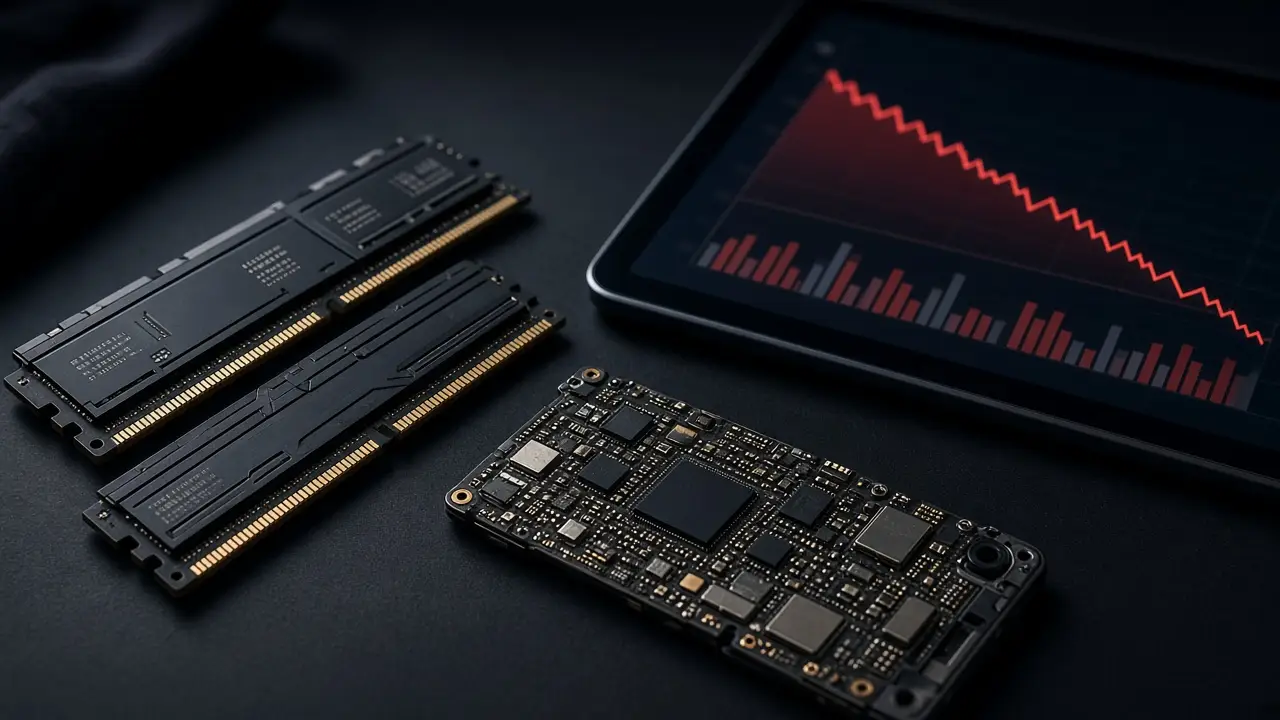
Apple shares fell nearly 4% in November 3 premarket coverage despite reporting quarterly revenue of $114.5 billion and net profit of $30.7 billion, according to Investopedia. The report said investors were concerned about margin pressure tied to memory-chip costs. The figures illustrate how beating earnings expectations does not necessarily guarantee a positive stock reaction when investors focus on management’s outlook for future profitability.
For hardware companies, component inflation can complicate pricing decisions. A manufacturer may absorb higher input costs, negotiate with suppliers or pass some expense to customers, with different consequences for margins and demand. Apple’s reaction also unfolded during a volatile period for technology stocks, when capital spending and profit durability were already prominent investor concerns.
Strong sales, cautious outlook
Apple reported fiscal fourth-quarter revenue of $114.48 billion and earnings of $2.10 per share, beating Wall Street expectations, Reuters reported. Demand for the iPhone 18 Pro and higher selling prices supported results. But the company's guidance for the December holiday quarter shifted attention from past sales to future profitability. Apple forecast gross margin between 45% and 46%, below the 47.9% reported in the September quarter.
Memory chips are the central concern. Their prices have risen as demand for advanced computing hardware grows, and Apple expects costs to continue increasing into next year. Higher prices for some iPhones and MacBooks have helped offset the pressure, but manufacturers cannot necessarily pass every component increase to consumers without affecting demand. Investors were therefore evaluating the margin outlook rather than simply applauding an earnings beat.
Supply commitments and product launches
Chief executive John Ternus said Apple had secured supplies, while purchasing commitments increased by $33 billion. Commitments indicate the scale of the company's procurement planning, not a statement that the same amount was immediately paid in cash. The company is managing component availability while introducing new hardware, including the foldable iPhone Duo.
Reuters reported that the Duo sold out quickly but remains supply-constrained. Apple is replacing a small number of units following reported display problems and cannot say when supply will match demand. A sold-out launch signals that available inventory was taken up; without production and order figures, it does not quantify total demand or prove the product will become a major revenue contributor.
Mixed performance beneath the headline
Mac revenue exceeded expectations, but iPad, wearables and China results fell short. Apple's services-growth outlook of 8% to 9% for the December quarter was also below analysts' estimates. Those differences matter because investors value Apple partly for the resilience of its installed-base services business, not just annual iPhone refreshes. Slower-than-expected services growth and weaker gross margin can affect the earnings outlook even during a strong hardware cycle.
Apple also cited spending on servers for AI features and the possibility of usage limits for some capabilities. That links the company to the wider market debate about how much computing infrastructure companies must buy to support AI products and whether the resulting services generate sufficient value.
Why the shares reacted negatively
Apple fell in Tuesday trading after the report, with Reuters recording a 2.2% decline around midday Eastern. The reaction was not a rejection of the reported $114.48 billion in quarterly sales. It reflected the gap between good historical results and a less comfortable near-term cost outlook. Investors will now watch whether holiday demand, product pricing and component supply allow Apple to defend margins within its guidance range.
More in Markets.